
Milwaukee winters carry a particular kind of unpredictability thanks to Lake Michigan sitting right along the city’s edge. Lake effect snow can turn a fairly mild forecast into a genuine whiteout within a matter of hours, dumping significant snowfall on the city and surrounding areas even when inland Wisconsin communities see far less accumulation from the same weather system. This lake driven pattern, combined with the deep cold that regularly settles over the region, creates a winter environment that asks a lot of a vehicle, and batteries in particular tend to bear the brunt of it.
Why Lake Effect Snow Creates A Different Kind Of Winter Challenge
Lake effect snow forms when cold air moves across the relatively warmer waters of Lake Michigan, picking up moisture that then falls as snow once it reaches land. This process can produce intense, localized snowfall that develops and intensifies quickly, sometimes catching drivers off guard even when the broader regional forecast looked relatively mild. Milwaukee drivers often deal with sudden visibility drops and rapid snow accumulation that would not be predicted by a simple regional temperature forecast alone.
This unpredictability matters for vehicle readiness specifically, since a car that seems adequately prepared based on a mild morning forecast can suddenly need to perform in genuinely severe winter conditions by afternoon, with little advance warning to make any last minute adjustments.
Why Milwaukee Batteries Face Such Consistent Strain
Cold temperatures reduce a battery’s ability to deliver power, since the chemical reaction that generates electricity slows down significantly as temperatures drop. Milwaukee’s winters combine genuinely cold air temperatures with the added humidity that comes from proximity to Lake Michigan, and this combination can be tougher on batteries than dry cold alone, since damp cold air conducts heat away from components more efficiently than dry air does.
A battery that is already a few years old, having accumulated wear from previous winters and summer heat cycles, is especially vulnerable once a genuine lake effect cold snap arrives. The sudden nature of these weather shifts means a battery that seemed to be managing adequately during a milder stretch can fail with very little warning once temperatures drop sharply and snow accumulation adds extra demand from wipers, defrosters, and heated components all running simultaneously.
Signs Your Battery May Not Survive The Next Cold Snap
A car that cranks noticeably slower than it did earlier in the season is one of the clearest early warning signs. Dimming headlights or interior lights during startup, a battery warning light on the dashboard, or needing a jump start even once during a mild cold spell are all strong indicators that a battery is unlikely to hold up once a more severe lake effect event arrives. If you have already experienced a starting failure, our guide on the top 10 reasons your car won’t start and how to get back on the road covers a range of causes worth ruling out, several of which become more common once Milwaukee’s winter conditions fully set in.
Corrosion on battery terminals is worth checking alongside these performance symptoms, since a buildup of corrosion can mimic some of the same slow cranking behavior as an actual weak battery, even when the battery itself still has reasonable capacity remaining. A quick visual check for a white or greenish buildup around the terminals, and cleaning it off if present, is a simple step that sometimes resolves what looks like a battery problem without needing a full replacement.
Why Testing Beats Guessing About Battery Health
Visually, there is no reliable way to tell how much life remains in a battery, since the outward appearance rarely changes even as internal capacity declines. A proper battery test measures actual cranking performance and remaining capacity, giving a far more accurate picture than assuming a battery is fine simply because the car started without issue that morning. This distinction matters considerably more here than in a milder climate, since Milwaukee’s lake effect pattern means conditions can shift from manageable to severe faster than a driver might expect.
Preparing Beyond The Battery
Tire tread and pressure deserve attention heading into lake effect season, since sudden, heavy snowfall events demand more traction than a typical light snow would require, and a tire that is borderline on tread depth offers considerably less margin for safety during a genuine whiteout event. Wiper blades and washer fluid rated for freezing temperatures matter as well, given how quickly visibility can deteriorate once lake effect snow bands move through the area.
Given how suddenly a lake effect band can develop, it is worth keeping a small winter emergency kit in your vehicle throughout the season, including an ice scraper, a small shovel, gloves, and a blanket. Drivers caught in a sudden whiteout or a brief roadside delay during a heavy band of lake effect snow are considerably better off with a few basic supplies on hand than without them, even if the situation resolves within an hour or two once the heaviest snow passes.
Confirming your vehicle’s coolant mixture is rated for Milwaukee’s coldest temperatures, and that your heater and defroster are functioning properly, rounds out a reasonable pre winter check, since both play a direct role in maintaining visibility and comfort during a sudden severe snow event.
Why A Mobile Mechanic Fits Milwaukee’s Winter Reality
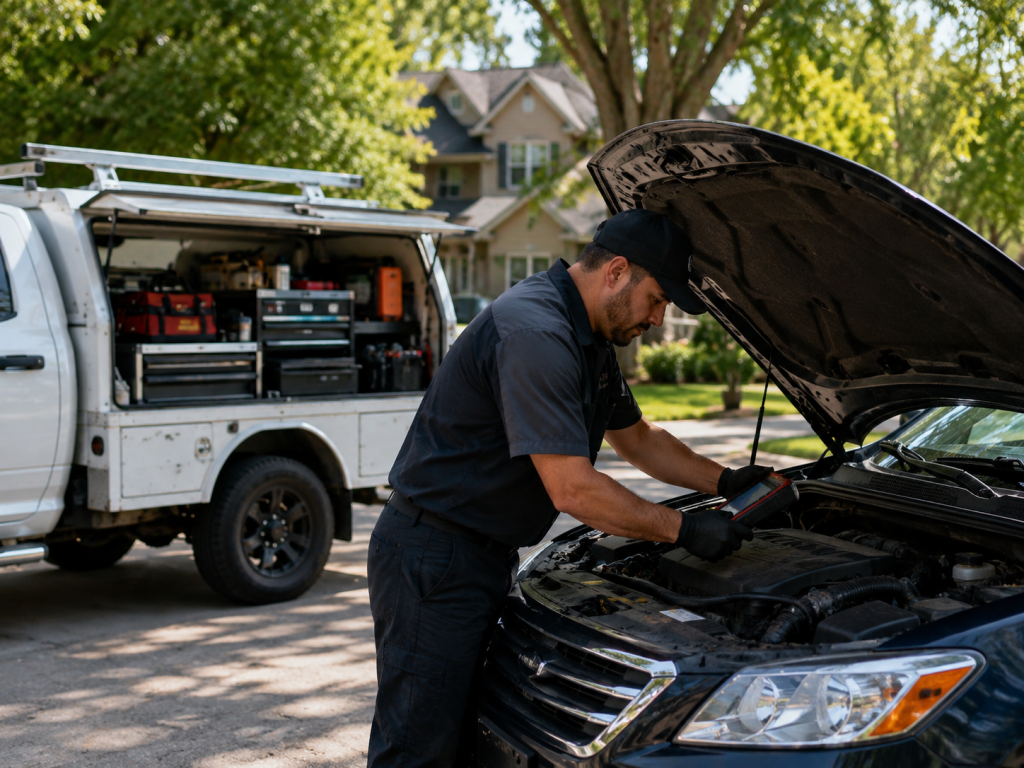
Given how quickly Milwaukee’s lake effect conditions can shift from mild to severe, having a technician test your battery and check winter readiness before the season’s first serious cold snap is more practical than waiting for a scheduled shop appointment that might not align with the timing of an approaching storm. A mobile mechanic can come to your home or workplace, test your battery’s actual condition, and address winter readiness items without requiring you to arrange a tow or navigate deteriorating roads to reach a shop.
We covered the broader advantages of this approach in our article on why mobile mechanics are better than traditional auto shops in Milwaukee, which explains how convenience and quick response times come together, particularly valuable during a season when lake effect snow can arrive with very little warning.
Stay Ahead Of What Lake Effect Winters Do To Your Car
Milwaukee’s proximity to Lake Michigan makes winter here genuinely unpredictable, and a battery or vehicle that seems adequately prepared during a mild stretch can be tested severely once a lake effect event moves through. Testing your battery proactively, watching for early warning signs, and checking tires, wipers, and coolant before the season’s first serious snow are all simple habits that keep you from being caught off guard, whether that first serious event arrives right on schedule or catches the whole city by surprise the way lake effect snow sometimes does.
If it has been a while since your vehicle had a winter readiness check, visit our homepage to learn more about our services, or reach out through our contact us page to schedule a visit at your home or office anywhere in the Milwaukee area.
A little proactive attention now can help your car hold up against everything Milwaukee’s lake effect winter is about to bring, whether that means a mild dusting of snow or the kind of sudden, heavy band that catches the whole city off guard.