
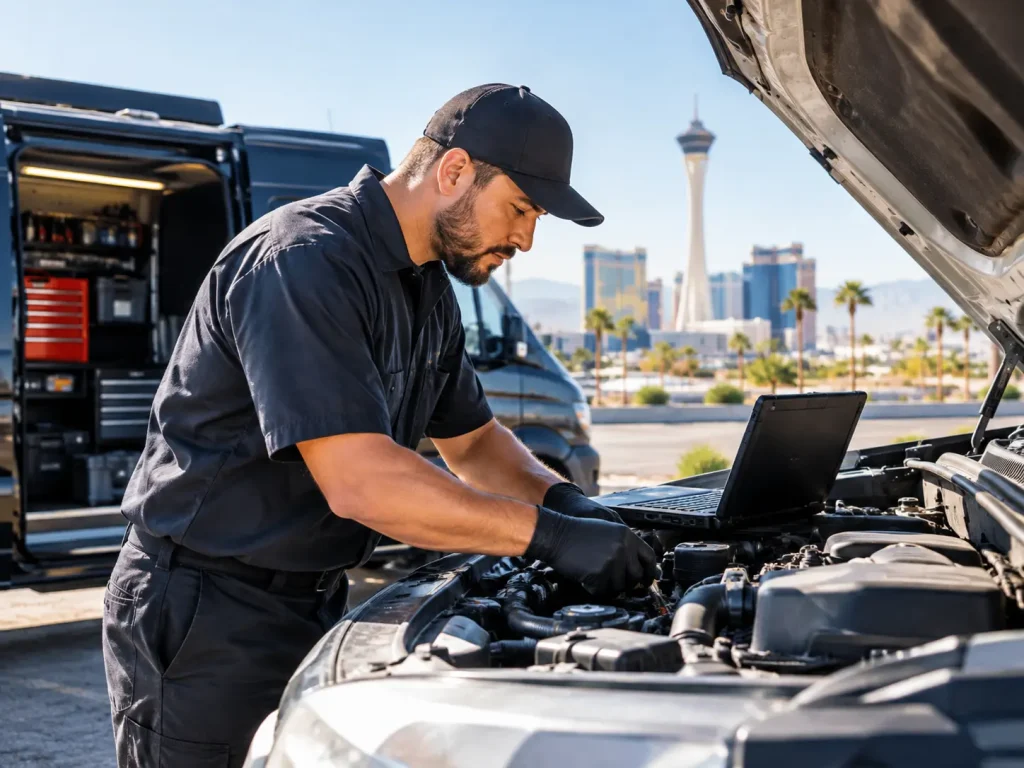
Milwaukee winters are no joke. Bitter cold, lake wind, snow, ice, and months of road salt put every part of your car to the test. A vehicle that runs fine in October can refuse to start on the first deep freeze, and the cost of waiting can be a tow, a missed day of work, or a repair that could have been avoided. The good news is that winter car prep is not complicated, and a few simple steps can make a real difference. This FAQ answers the most common questions about car winterization in Milwaukee, covers the parts that matter most, and explains how a mobile mechanic can help you get ready without losing a day at the shop.
What Does It Mean to Winterize a Car?
Winterizing a car means getting it ready for cold weather, snow, ice, and salt. It is a mix of inspections, fluid checks, and small repairs that help the car start reliably, grip the road, keep you warm, and hold up through the season. There is no single official list, but most winter prep focuses on the battery, tires, brakes, fluids, wipers, lights, heating system, and an emergency kit. The goal is to find weak spots now, while the weather is mild and the repair schedule is open, and not on a freezing morning.
When Should I Winterize My Car?
Early in the fall is ideal, before the first hard freeze and before shops fill up with last minute requests. Cold weather tends to expose problems that were already there, so finding them early gives you time to fix them. If winter has already arrived, it is still worth doing as soon as you can. Our article on lake effect winters and preparing your car for Milwaukee’s cold goes deeper into how local conditions affect your vehicle, and this FAQ covers the practical steps.
Why Is the Battery So Important in Winter?
Cold weather is hard on batteries. Low temperatures slow the chemical reaction inside the battery and reduce the power it can deliver, while a cold engine needs more power to turn over because the oil is thicker. A battery that seemed fine in summer can fail on the first very cold morning. Signs that a battery may be weak include slow cranking, dim headlights, a battery warning light, corrosion on the terminals, and an age of several years. A technician can test the battery and the charging system to see how much life is left. If your car does not start, our guide to the top 10 reasons your car won’t start and how to get back on the road walks through the common causes.
Do I Need Winter Tires?
Many drivers in snowy climates choose winter tires, because the rubber stays more flexible in the cold and the tread is designed for snow and ice. All season tires are a common compromise, but they may not grip as well in very cold or icy conditions. The right choice depends on how and where you drive, and your owner’s manual and a tire professional can help you decide. Whatever tires you use, check the tread depth, look for cracks and uneven wear, and keep the pressure correct. Tire pressure drops as the temperature falls, so check it often during the season, using the pressure listed on the label inside the driver’s door jamb or in your owner’s manual.
How Do I Know if My Tires Are Good Enough?
- Check the tread depth, since worn tires lose grip quickly on snow and slush
- Look for cracks, bulges, cuts, or exposed cords on the sidewalls
- Look for uneven wear, which can mean alignment or suspension problems
- Make sure all four tires are the same type and in similar condition where possible
- Check the spare, along with the jack and lug wrench
Tires are your only contact with the road, so this is an area where it pays to be careful.
Should I Have My Brakes Checked Before Winter?
Yes. Snow, ice, and slush make stopping harder, so you want your brakes in good shape. Salt and moisture also encourage rust on rotors, calipers, and brake lines. Pay attention to squealing, grinding, a soft pedal, pulling to one side, or vibration, and have any of these inspected. A technician can check the pad and rotor thickness, the calipers, the brake lines, and the brake fluid. Brakes are a safety system, so when you are unsure, it is better to have them looked at.
What Fluids Should I Check?
Several fluids matter in the cold:
- Engine oil, which should match the viscosity your owner’s manual recommends for cold weather
- Coolant, or antifreeze, which protects the engine from freezing and overheating and should be at the right level and mixture
- Windshield washer fluid, which should be rated for freezing temperatures
- Brake fluid, which absorbs moisture over time
- Power steering and transmission fluid, where your car uses them
Check levels with the engine cool, and never open a coolant cap on a hot engine. Follow the service intervals in your owner’s manual, which are often shorter for severe driving conditions such as short trips in cold weather.
Why Does Coolant Matter in Winter?
Coolant, often called antifreeze, does two jobs. It keeps the engine from overheating, and it keeps the liquid in the cooling system from freezing. Old or diluted coolant loses its protection, and a frozen cooling system can crack parts and cause serious damage. The right coolant type and mixture are listed in your owner’s manual. A technician can test the coolant’s condition and protection level, and flush and refill the system if needed. Heater performance also depends on the cooling system, so weak heat can be a sign of a problem.
What About Wipers and Visibility?
Visibility matters a great deal in snow, sleet, and road spray. Replace worn or streaking wiper blades, and consider winter blades that resist ice buildup. Keep the washer reservoir full with fluid that will not freeze. Make sure the headlights, brake lights, turn signals, and hazard lights all work, and clean the lenses of dirt and salt film. Test the defroster and the rear defogger, since you will rely on them every day. Clear snow and ice from the whole car, including the roof and lights, before you drive.
Does the Heater Need Attention?
It does. A heater that blows weak or cool air can be a sign of low coolant, a stuck thermostat, a clogged heater core, or a blower problem. The defroster uses the same system, so poor heat is also a safety issue. If the heater is not performing, have it checked before the deep cold sets in.
How Does Road Salt Affect My Car?
Salt keeps roads safer, but it is hard on vehicles. It speeds up rust on the underbody, brake lines, fuel lines, exhaust parts, and body panels, and it can damage paint and electrical connections. Regular washing during the winter, including the underside when conditions allow, helps remove salt before it does damage. Wax or sealant on the paint adds a layer of protection. Have the underbody and brake lines inspected from time to time, since corrosion on those parts is a safety concern.
What Should I Keep in the Car for Winter?
- A snow brush and ice scraper
- A small shovel and a bag of sand or cat litter for traction
- Jumper cables or a portable jump starter
- A flashlight with extra batteries
- Warm blankets, gloves, a hat, and extra layers
- Water and non perishable snacks
- A phone charger and a charged phone
- A basic first aid kit and a tire pressure gauge
- Reflective triangles or flares
If you get stuck, stay with your car when it is safe, call for help, and avoid running the engine in an enclosed space or with the tailpipe blocked by snow, since exhaust fumes are dangerous.
How Full Should I Keep the Gas Tank?
Many drivers keep the tank at least half full in winter. A fuller tank gives you more options if you get stuck or delayed, and it helps limit moisture buildup in the tank. It also means you can keep the car running for heat in an emergency, as long as the exhaust is clear and you are in a safe, open area.
Should I Warm Up the Car Before Driving?
Modern engines do not need a long warm up. Your owner’s manual explains what is recommended, but in general it is best to let the engine run briefly and then drive gently until it warms up. Long idling wastes fuel and does not warm the whole vehicle as well as driving does. Never warm up a car in a closed garage.
What Are the Signs My Car Is Not Ready for Winter?
- Slow or labored starting
- Dim lights, or a battery or charging warning light
- Weak or cool air from the heater
- Squealing or grinding brakes
- Worn, cracked, or underinflated tires
- Streaking or chattering wipers
- Coolant that is low, discolored, or leaking
- A check engine light or other warning lights
- Rust or corrosion around the battery terminals or underbody
Any of these deserves attention before the weather gets worse.
Can a Mobile Mechanic Winterize My Car?
In many cases, yes. A mobile mechanic can come to your home or workplace in the Milwaukee area, test the battery and charging system, inspect the tires, brakes, belts, hoses, and fluids, check the coolant, look at the wipers and lights, and handle many common repairs on site, such as battery replacement, wiper replacement, and fluid service. That saves you a trip to a shop in the cold. Some larger jobs, such as major brake work or repairs that need a lift or specialized equipment, may need a full shop, and a trustworthy technician will tell you honestly when that is the case. When you book, share your vehicle’s year, make, model, and mileage, and mention anything you have noticed, such as slow starts, weak heat, or warning lights.
Get Ready Before the Deep Freeze
Winterizing is about preventing surprises. A battery test, a look at the tires and brakes, fresh fluids, and a stocked emergency kit can keep you moving through the toughest weeks of the year. If you have not had your car looked at yet, now is a good time.
To learn more about our services, visit our homepage. If you would like your car ready for winter, reach out through our contact us page and we will come to you anywhere in the Milwaukee area.